¡45% dto en libros con envío express!  Ver más

Enviar a
Quito, Pichincha
0
  • argentina
  • chile
  • colombia
  • españa
  • méxico
  • perú
  • estados unidos
  • internacional

Selecciona tu país

América

Europa

Resto del mundo

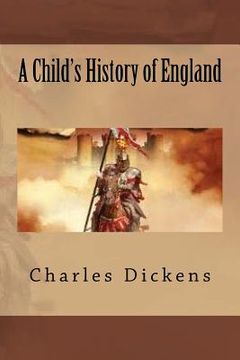
portada A Child's History of England (en Inglés)
Formato
Libro Físico
Editorial
Idioma
Inglés
N° páginas
500
Encuadernación
Tapa Blanda
Dimensiones
22.9 x 15.2 x 2.6 cm
Peso
0.66 kg.
ISBN13
9781540622075

A Child's History of England (en Inglés)

Charles Dickens (Autor) · Createspace · Tapa Blanda

A Child's History of England (en Inglés) - Charles Dickens

Libro Nuevo Importado
Envío: 20 a 27 días háb.
$ 82.94$ 45.62
-45%
Costos de importación incluídos en el precio ✅
Libro Nuevo

Quedan más de 100 unidades

$ 45.62
Llega entre el 24 Ago y el 04 Sep a Quito, Pichincha. Seleccionar ubicación

Reseña del libro "A Child's History of England (en Inglés)"

Extract: CHAPTER I-ANCIENT ENGLAND AND THE ROMANS If you look at a Map of the World, you will see, in the left-hand upper corner of the Eastern Hemisphere, two Islands lying in the sea. They are England and Scotland, and Ireland. England and Scotland form the greater part of these Islands. Ireland is the next in size. The little neighbouring islands, which are so small upon the Map as to be mere dots, are chiefly little bits of Scotland, -broken off, I dare say, in the course of a great length of time, by the power of the restless water. In the old days, a long, long while ago, before Our Saviour was born on earth and lay asleep in a manger, these Islands were in the same place, and the stormy sea roared round them, just as it roars now. But the sea was not alive, then, with great ships and brave sailors, sailing to and from all parts of the world. It was very lonely. The Islands lay solitary, in the great expanse of water. The foaming waves dashed against their cliffs, and the bleak winds blew over their forests; but the winds and waves brought no adventurers to land upon the Islands, and the savage Islanders knew nothing of the rest of the world, and the rest of the world knew nothing of them. It is supposed that the Phoenicians, who were an ancient people, famous for carrying on trade, came in ships to these Islands, and found that they produced tin and lead; both very useful things, as you know, and both produced to this very hour upon the sea-coast. The most celebrated tin mines in Cornwall are, still, close to the sea. One of them, which I have seen, is so close to it that it is hollowed out underneath the ocean; and the miners say, that in stormy weather, when they are at work down in that deep place, they can hear the noise of the waves thundering above their heads. So, the Phoenicians, coasting about the Islands, would come, without much difficulty, to where the tin and lead were.
Charles Dickens
  (Autor)
Ver Página del Autor
Charles Dickens (7 de febrero de 1812 - 9 de junio de 1870) nació en Portsmouth y era el primogénito varón de un funcionario de la Armada Real. A los doce años, el encarcelamiento de su padre por deudas lo obligó a ponerse a trabajar en una fábrica de betún. Su educación fue irregular: aprendió por su cuenta taquigrafía, trabajó como ayudante en el bufete de un abogado y finalmente fue corresponsal parlamentario del Morning Chronicle.

De familia humilde, el "bueno de Carlos" no recibió educación formal hasta los nueve años, siendo muy juzgado por la crítica de la época al considerar que Dickens era demasiado autodidacta. Su vida daría un giro inesperado con el encarcelamiento de su padre por las deudas, trasladándose su familia a vivir con él a la cárcel, permitido en ese momento por las leyes británicas. A la edad de 12 años ya es considerado apto para comenzar a trabajar en una fábrica de tintes. A pesar de que la situación de su familia había mejorado, su madre puso su empeño en que siguiera trabajando allí, inspirándole a escribir una de sus obras cumbre, David Copperfield.

Sus artículos, luego recogidos en Escenas de la vida de Londres por «Boz» (1836-1837), tuvieron gran éxito y, con la aparición en 1837 de Los papeles póstumos del Club Pickwick, Dickens se convirtió en un auténtico fenómeno editorial. Novelas como Oliver Twist (1837-1839), Nicholas Nickleby (1838-1839) o Barnaby Rudge (1841) alcanzaron enorme popularidad, así como algunas crónicas de viajes, como Estampas de Italia (1846). Con Dombey e hijo (1846-1848) inició su época de madurez, de la que son buenos ejemplos David Copperfield (1849-1850), su primera novela en primera persona y su favorita, en la que desarrolló algunos episodios autobiográficos; La Casa lúgubre (1852-1853); La pequeña Dorrit (1855-1857), Historia de dos ciudades (1859), Grandes esperanzas (1860-1861) y Nuestro amigo común (1864-1865). Murió en Gad's Hill, su casa de campo en Higham, en el condado de Kent.
Ver más
Ver menos

Opiniones del libro

Preguntas frecuentes sobre el libro

Todos los libros de nuestro catálogo son Originales.
El libro está escrito en Inglés.
La encuadernación de esta edición es Tapa Blanda.

Preguntas y respuestas sobre el libro

¿Tienes una pregunta sobre el libro? Inicia sesión para poder agregar tu propia pregunta.

Opiniones sobre Buscalibre

Ver más opiniones de clientes