Envío express con hasta 50% OFF  Ver más

Enviar a
Quito, Pichincha
0
  • argentina
  • chile
  • colombia
  • españa
  • méxico
  • perú
  • estados unidos
  • internacional

Selecciona tu país

América

Europa

Resto del mundo

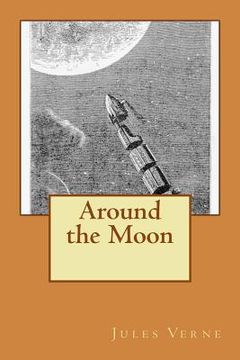
portada Around the Moon
Formato
Libro Físico
Editorial
Idioma
Inglés
N° páginas
390
Encuadernación
Tapa Blanda
Dimensiones
22.9 x 15.2 x 2.0 cm
Peso
0.52 kg.
ISBN13
9781517355371

Around the Moon

Jules Verne (Autor) · Createspace · Tapa Blanda

Around the Moon - Ballin, G-Ph ; Verne, Jules

Sin Stock

Reseña del libro "Around the Moon"

Around the Moon (French: Autour de la Lune, 1870), Jules Verne's sequel to From the Earth to the Moon, is a science fiction novel continuing the trip to the moon which left the reader in suspense after the previous novel. It was later combined with From the Earth to the Moon to create A Trip to the Moon and Around It. Plot Having been fired out of the giant Columbiad space gun, the Baltimore Gun Club's bullet-shaped projectile, along with its three passengers, Barbicane, Nicholl and Michel Ardan, begins the five-day trip to the moon. A few minutes into the journey, a small, bright asteroid passes within a few hundred yards of them, but luckily does not collide with the projectile. The asteroid had been captured by the Earth's gravity and had become a second moon. An illustration from Jules Verne's novel "Around the Moon" drawn by Émile-Antoine Bayard and Alphonse de Neuville, September 16, 1872 The three travelers undergo a series of adventures and misadventures during the rest of the journey, including disposing of the body of a dog out a window, suffering intoxication by gases, and making calculations leading them, briefly, to believe that they are to fall back to Earth. During the latter part of the voyage, it becomes apparent that the gravitational force of their earlier encounter with the asteroid has caused the projectile to deviate from its course. The projectile enters lunar orbit, rather than landing on the moon as originally planned. Barbicane, Ardan and Nicholl begin geographical observations with opera glasses. The projectile then dips over the northern hemisphere of the moon, into the darkness of its shadow. It is plunged into extreme cold, before emerging into the light and heat again. They then begin to approach the moon's southern hemisphere. From the safety of their projectile, they gain spectacular views of Tycho, one of the greatest of all craters on the moon. The three men discuss the possibility of life on the moon, and conclude that it is barren. The projectile begins to move away from the moon, towards the 'dead point' (the place at which the gravitational attraction of the moon and Earth becomes equal). Michel Ardan hits upon the idea of using the rockets fixed to the bottom of the projectile (which they were originally going to use to deaden the shock of landing) to propel the projectile towards the moon and hopefully cause it to fall onto it, thereby achieving their mission. When the projectile reaches the point of neutral attraction, the rockets are fired, but it is too late. The projectile begins a fall onto the Earth from a distance of 160,000 miles, and it is to strike the Earth at a speed of 115,200 miles per hour, the same speed at which it left the mouth of the Columbiad. All hope seems lost for Barbicane, Nicholl and Ardan. Four days later, the crew of a US Navy vessel USS Susquehanna spots a bright meteor fall from the sky into the sea. This turns out to be the returning projectile, and the three men inside are found to be alive and are rescued. They are treated to lavish homecoming celebrations as the first people to leave Earth.
Jules Verne
  (Autor)
Ver Página del Autor
Jules Gabriel Verne, (Nantes, 8 de febrero de 1828-Amiens, 24 de marzo de 1905), destacado escritor francés y pionero de la literatura de aventuras y ciencia ficción, es reconocido por sus novelas visionarias, donde combinó el rigor científico con una narrativa emocionante. Obras como Veinte mil leguas de viaje submarino, Viaje al centro de la Tierra y La vuelta al mundo en ochenta días no solo entretienen, sino que anticiparon avances tecnológicos con asombrosa precisión.

Miembro de la Legión de Honor y uno de los autores más traducidos de la historia, Verne influyó en generaciones de lectores, científicos y escritores. Sus historias, meticulosamente documentadas, siguen siendo un referente de la literatura universal, ideal para quienes buscan clásicos llenos de imaginación, aventura y conocimiento.
Ver más
Ver menos

Opiniones del libro

Preguntas frecuentes sobre el libro

Todos los libros de nuestro catálogo son Originales.
El libro está escrito en Inglés.
La encuadernación de esta edición es Tapa Blanda.

Preguntas y respuestas sobre el libro

¿Tienes una pregunta sobre el libro? Inicia sesión para poder agregar tu propia pregunta.

Opiniones sobre Buscalibre

Ver más opiniones de clientes