¡Envío express a un clic!  Ver más

Enviar a
Quito, Pichincha
0
  • argentina
  • chile
  • colombia
  • españa
  • méxico
  • perú
  • estados unidos
  • internacional

Selecciona tu país

América

Europa

Resto del mundo

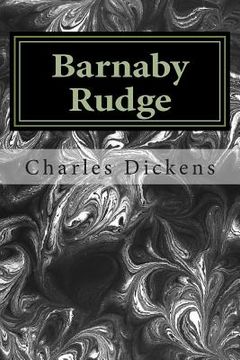
portada Barnaby Rudge: (Charles Dickens Classics Collection) (en Inglés)
Formato
Libro Físico
Editorial
Idioma
Inglés
N° páginas
276
Encuadernación
Tapa Blanda
Dimensiones
22.9x15.2x1.5 cm
Peso
0.37 kg.
ISBN13
9781502852830

Barnaby Rudge: (Charles Dickens Classics Collection) (en Inglés)

Charles Dickens (Autor) · Createspace · Tapa Blanda

Barnaby Rudge: (Charles Dickens Classics Collection) (en Inglés) - Charles Dickens

Libro Nuevo Importado
Envío: 20 a 27 días háb.
$ 55.95$ 27.97
-50%
Costos de importación incluídos en el precio ✅
Libro Nuevo

Quedan 100 unidades

$ 27.97
Llega entre el 17 Sep y el 30 Sep a Quito, Pichincha. Seleccionar ubicación

Reseña del libro "Barnaby Rudge: (Charles Dickens Classics Collection) (en Inglés)"

The late Mr Waterton having, some time ago, expressed his opinion that ravens are gradually becoming extinct in England, I offered the few following words about my experience of these birds. The raven in this story is a compound of two great originals, of whom I was, at different times, the proud possessor. The first was in the bloom of his youth, when he was discovered in a modest retirement in London, by a friend of mine, and given to me. He had from the first, as Sir Hugh Evans says of Anne Page, 'good gifts', which he improved by study and attention in a most exemplary manner. He slept in a stable-generally on horseback-and so terrified a Newfoundland dog by his preternatural sagacity, that he has been known, by the mere superiority of his genius, to walk off unmolested with the dog's dinner, from before his face. He was rapidly rising in acquirements and virtues, when, in an evil hour, his stable was newly painted. He observed the workmen closely, saw that they were careful of the paint, and immediately burned to possess it. On their going to dinner, he ate up all they had left behind, consisting of a pound or two of white lead; and this youthful indiscretion terminated in death. While I was yet inconsolable for his loss, another friend of mine in Yorkshire discovered an older and more gifted raven at a village public-house, which he prevailed upon the landlord to part with for a consideration, and sent up to me. The first act of this Sage, was, to administer to the effects of his predecessor, by disinterring all the cheese and halfpence he had buried in the garden-a work of immense labour and research, to which he devoted all the energies of his mind. When he had achieved this task, he applied himself to the acquisition of stable language, in which he soon became such an adept, that he would perch outside my window and drive imaginary horses with great skill, all day. Perhaps even I never saw him at his best, for his former master sent his duty with him, 'and if I wished the bird to come out very strong, would I be so good as to show him a drunken man'-which I never did, having (unfortunately) none but sober people at hand.
Charles Dickens
  (Autor)
Ver Página del Autor
Charles Dickens (7 de febrero de 1812 - 9 de junio de 1870) nació en Portsmouth y era el primogénito varón de un funcionario de la Armada Real. A los doce años, el encarcelamiento de su padre por deudas lo obligó a ponerse a trabajar en una fábrica de betún. Su educación fue irregular: aprendió por su cuenta taquigrafía, trabajó como ayudante en el bufete de un abogado y finalmente fue corresponsal parlamentario del Morning Chronicle.

De familia humilde, el "bueno de Carlos" no recibió educación formal hasta los nueve años, siendo muy juzgado por la crítica de la época al considerar que Dickens era demasiado autodidacta. Su vida daría un giro inesperado con el encarcelamiento de su padre por las deudas, trasladándose su familia a vivir con él a la cárcel, permitido en ese momento por las leyes británicas. A la edad de 12 años ya es considerado apto para comenzar a trabajar en una fábrica de tintes. A pesar de que la situación de su familia había mejorado, su madre puso su empeño en que siguiera trabajando allí, inspirándole a escribir una de sus obras cumbre, David Copperfield.

Sus artículos, luego recogidos en Escenas de la vida de Londres por «Boz» (1836-1837), tuvieron gran éxito y, con la aparición en 1837 de Los papeles póstumos del Club Pickwick, Dickens se convirtió en un auténtico fenómeno editorial. Novelas como Oliver Twist (1837-1839), Nicholas Nickleby (1838-1839) o Barnaby Rudge (1841) alcanzaron enorme popularidad, así como algunas crónicas de viajes, como Estampas de Italia (1846). Con Dombey e hijo (1846-1848) inició su época de madurez, de la que son buenos ejemplos David Copperfield (1849-1850), su primera novela en primera persona y su favorita, en la que desarrolló algunos episodios autobiográficos; La Casa lúgubre (1852-1853); La pequeña Dorrit (1855-1857), Historia de dos ciudades (1859), Grandes esperanzas (1860-1861) y Nuestro amigo común (1864-1865). Murió en Gad's Hill, su casa de campo en Higham, en el condado de Kent.
Ver más
Ver menos

Opiniones del libro

Preguntas frecuentes sobre el libro

Todos los libros de nuestro catálogo son Originales.
El libro está escrito en Inglés.
La encuadernación de esta edición es Tapa Blanda.

Preguntas y respuestas sobre el libro

¿Tienes una pregunta sobre el libro? Inicia sesión para poder agregar tu propia pregunta.

Opiniones sobre Buscalibre

Ver más opiniones de clientes