B-Days hasta 60% OFF en Stock Limitado  Ver más

Enviar a
Quito, Pichincha
0
  • argentina
  • chile
  • colombia
  • españa
  • méxico
  • perú
  • estados unidos
  • internacional

Selecciona tu país

América

Europa

Resto del mundo

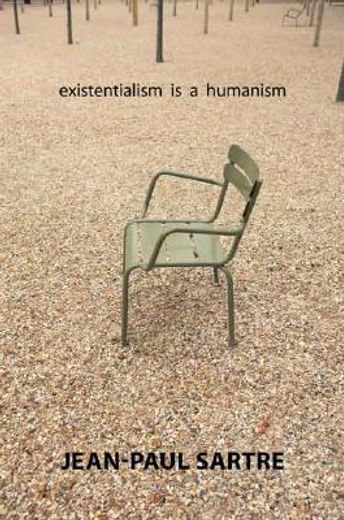
portada existentialism is a humanism (en Inglés)
existentialism is a humanism (en Inglés)existentialism is a humanism (en Inglés)existentialism is a humanism (en Inglés)existentialism is a humanism (en Inglés)
Formato
Libro Físico
Introducción de
Traducido por
Idioma
Inglés
N° páginas
128
Encuadernación
Tapa Blanda
Dimensiones
19.6x12.7x1 cm
Peso
0.11 kg.
ISBN
0300115466
ISBN13
9780300115468

existentialism is a humanism (en Inglés)

Jean-Paul Sartre (Autor) · Annie Cohen-Solal (Introducción de) · Carol Macomber (Traducido por) · Yale University Press · Tapa Blanda

existentialism is a humanism (en Inglés) - Jean-Paul Sartre

Libro Nuevo Importado
Envío: 16 a 23 días háb.
$ 43.09$ 21.54
-50%
Costos de importación incluídos en el precio ✅
Libro Nuevo

Quedan 81 unidades

$ 21.54
Llega entre el 18 Sep y el 01 Oct a Quito, Pichincha. Seleccionar ubicación

Reseña del libro "existentialism is a humanism (en Inglés)"

A fresh translation of two seminal works of existentialism "To understand Jean-Paul Sartre is to understand something important about the present time."--Iris Murdoch "Sartre matters because so many fundamental points of his analysis of the human reality are right and true, and because their accuracy and veracity entail real consequences for our lives as individuals and in social groups."--Benedict O'Donohoe, Philosophy Now It was to correct common misconceptions about his thought that Jean-Paul Sartre, the most dominent European intellectual of the post-World War II decades, accepted an invitation to speak on October 29, 1945, at the Club Maintenant in Paris. The unstated objective of his lecture ("Existentialism Is a Humanism") was to expound his philosophy as a form of "existentialism," a term much bandied about at the time. Sartre asserted that existentialism was essentially a doctrine for philosophers, though, ironically, he was about to make it accessible to a general audience. The published text of his lecture quickly became one of the bibles of existentialism and made Sartre an international celebrity. The idea of freedom occupies the center of Sartre's doctrine. Man, born into an empty, godless universe, is nothing to begin with. He creates his essence--his self, his being--through the choices he freely makes ("existence precedes essence"). Were it not for the contingency of his death, he would never end. Choosing to be this or that is to affirm the value of what we choose. In choosing, therefore, we commit not only ourselves but all of mankind. This book presents a new English translation of Sartre's 1945 lecture and his analysis of Camus's The Stranger, along with a discussion of these works by acclaimed Sartre biographer Annie Cohen-Solal. This edition is a translation of the 1996 French edition, which includes Arlette Elkaïm-Sartre's introduction and a Q&A with Sartre about his lecture.
Jean-Paul Sartre
  (Autor)
Ver Página del Autor
Jean-Paul Sartre (París, 21 de junio de 1905 – 15 de abril de 1980) fue un filósofo, novelista, dramaturgo y activista político francés, considerado el principal representante del existencialismo y una figura clave del pensamiento del siglo XX. Estudió en la École Normale Supérieure, donde conoció a Simone de Beauvoir, su compañera intelectual y sentimental de por vida.

Su obra filosófica más influyente, El ser y la nada (1943), desarrolla una ontología basada en la libertad radical del ser humano, planteando que “la existencia precede a la esencia”, es decir, que no estamos predeterminados y debemos construirnos a través de nuestras elecciones. En literatura, destacó con La náusea (1938) y la obra teatral A puerta cerrada (1944), donde abordó el absurdo de la existencia y las relaciones humanas.

Sartre fue también un comprometido militante político: participó en la resistencia francesa durante la Segunda Guerra Mundial, apoyó los movimientos de descolonización y fue crítico del capitalismo y el totalitarismo. En 1964 rechazó el Premio Nobel de Literatura por considerar que un escritor no debe institucionalizarse.

Murió en 1980, dejando un legado filosófico y literario que sigue influyendo en la ética, la política y la teoría existencial.
Ver más
Ver menos

Opiniones del libro

Preguntas frecuentes sobre el libro

Todos los libros de nuestro catálogo son Originales.
El libro está escrito en Inglés.
La encuadernación de esta edición es Tapa Blanda.

Preguntas y respuestas sobre el libro

¿Tienes una pregunta sobre el libro? Inicia sesión para poder agregar tu propia pregunta.

Opiniones sobre Buscalibre

Ver más opiniones de clientes