Hasta 60% dto en libros seleccionados  Ver más

Enviar a
Quito, Pichincha
0
  • argentina
  • chile
  • colombia
  • españa
  • méxico
  • perú
  • estados unidos
  • internacional

Selecciona tu país

América

Europa

Resto del mundo

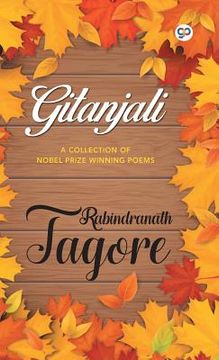
portada Gitanjali (en Inglés)
Formato
Libro Físico
Editorial
Idioma
Inglés
N° páginas
144
Encuadernación
Tapa Dura
Dimensiones
21.6 x 14.0 x 1.3 cm
Peso
0.33 kg.
ISBN13
9789387669079
Categorías

Gitanjali (en Inglés)

Rabindranath Tagore (Autor) · General Press · Tapa Dura

Gitanjali (en Inglés) - Rabindranath Tagore

Libro Nuevo Importado
Envío: 16 a 23 días háb.
$ 86.47$ 47.56
-45%
Costos de importación incluídos en el precio ✅
Libro Nuevo

Quedan más de 100 unidades

$ 47.56
Llega entre el 03 Sep y el 16 Sep a Quito, Pichincha. Seleccionar ubicación

Reseña del libro "Gitanjali (en Inglés)"

Moving, heart-felt prose poems by the beloved and much admired Bengali poet and mystic who first achieved international fame (and a Nobel Prize) in 1913 with his translation of these moving poems. Reminiscent of Blake and Gibran, they include many works that are almost biblical in their rhythms, phrasing and images. A collection of over one hundred inspirational poems, Gitanjali covers the breadth of life's experiences, from the quite pleasure of observing children at play to man's struggle with his god. ABOUT THE AUTHOR: Rabindranath Tagore (1861-1941) was the youngest son of Debendranath Tagore, a leader of the Brahmo Samaj. He was educated at home and although at seventeen he was sent to England for formal schooling, he did not finish his studies there. In his mature years, in addition to his many-sided literary activities, he managed the family estates, a project which brought him into close touch with common humanity and increased his interest in social reforms. He also started an experimental school at Shantiniketan where he tried his Upanishadic ideals of education. From time to time he participated in the Indian nationalist movement, though in his own non-sentimental and visionary way; and Gandhi, the political father of modern India, was his devoted friend. Tagore was knighted by the ruling British Government in 1915, but within a few years he resigned the honour as a protest against British policies in India. Tagore had early success as a writer in his native Bengal. With his translations of some of his poems he became rapidly known in the West. In fact, his fame attained a luminous height, taking him across continents on lecture tours and tours of friendship. For the world he became the voice of India's spiritual heritage; and for India, especially for Bengal, he became a great living institution. Although, Tagore wrote successfully in all literary genres, he was first of all a poet. Among his fifty and odd volumes of poetry are Manasi (1890) {The Ideal One}, Sonar Tari (1894) {The Golden Boat}, Gitanjali (1910) {Song Offerings}, Gitimalya (1914) {Wreath of Songs}, and Balaka (1916) {The Flight of Cranes}. The English renderings of his poetry, which include The Gardener (1913), Fruit-Gathering (1916), and The Fugitive (1921), do not generally correspond to particular volumes in the original Bengali; and in spite of its title, Gitanjali: Song Offerings (1912), the most acclaimed of them, contains poems from other works besides its namesake. Tagore's major plays are Raja (1910) {The King of the Dark Chamber}, Dakghar (1912) {The Post Office}, Achalayatan (1912) {The Immovable}, Muktadhara (1922) {The Waterfall}, and Raktakaravi (1926) {Red Oleanders}. He is the author of several volumes of short stories and a number of novels, among them Gora (1910), Ghare-Baire (1916) {The Home and the World}, and Yogayog (1929) {Crosscurrents}. Besides these, he wrote musical dramas, dance dramas, essays of all types, travel diaries, and two autobiographies, one in his middle years and the other shortly before his death in 1941. Tagore also left numerous drawings and paintings, and songs for which he wrote the music himself.
Rabindranath Tagore
  (Autor)
Ver Página del Autor
Rabindranath Tagore (Calcuta, India, 7 de mayo de 1861 – Santiniketan, 7 de agosto de 1941) fue un poeta, filósofo, músico, novelista, dramaturgo y educador bengalí, considerado una de las figuras literarias más influyentes de la India moderna y del mundo. Hijo de una familia culta y prominente, Tagore recibió una educación rica en literatura, arte y pensamiento oriental y occidental. Fue el primer escritor no europeo en ganar el Premio Nobel de Literatura en 1913, por su obra Gitanjali (“Ofrenda lírica”), un conjunto de poemas espirituales y filosóficos.

Tagore escribió en bengalí e inglés, y abordó temas como el amor, la espiritualidad, la libertad y la identidad cultural. Su obra abarca más de mil poemas, novelas, cuentos cortos, canciones y ensayos. Compuso la letra de los himnos nacionales de la India (Jana Gana Mana) y de Bangladesh (Amar Shonar Bangla), lo que destaca su influencia cultural y política.

Además, fundó la escuela y universidad Visva-Bharati, con un enfoque humanista y universalista. Tagore viajó ampliamente, promoviendo el diálogo intercultural y criticando el colonialismo. Su legado combina arte, pedagogía y espiritualidad, y sigue siendo fuente de inspiración para generaciones de lectores y pensadores.
Ver más
Ver menos

Opiniones del libro

Preguntas frecuentes sobre el libro

Todos los libros de nuestro catálogo son Originales.
El libro está escrito en Inglés.
La encuadernación de esta edición es Tapa Dura.

Preguntas y respuestas sobre el libro

¿Tienes una pregunta sobre el libro? Inicia sesión para poder agregar tu propia pregunta.

Opiniones sobre Buscalibre

Ver más opiniones de clientes