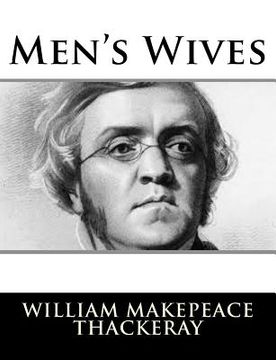
Reseña del libro "Men's Wives"
In a certain quiet and sequestered nook of the retired village of London-perhaps in the neighbourhood of Berkeley Square, or at any rate somewhere near Burlington Gardens-there was once a house of entertainment called the "Bootjack Hotel." Mr. Crump, the landlord, had, in the outset of life, performed the duties of Boots in some inn even more frequented than his own, and, far from being ashamed of his origin, as many persons are in the days of their prosperity, had thus solemnly recorded it over the hospitable gate of his hotel. Crump married Miss Budge, so well known to the admirers of the festive dance on the other side of the water as Miss Delancy; and they had one daughter, named Morgiana, after that celebrated part in the "Forty Thieves" which Miss Budge performed with unbounded applause both at the "Surrey" and "The Wells." Mrs. Crump sat in a little bar, profusely ornamented with pictures of the dancers of all ages, from Hillisberg, Rose, Parisot, who plied the light fantastic toe in 1805, down to the Sylphides of our day. There was in the collection a charming portrait of herself, done by De Wilde; she was in the dress of Morgiana, and in the act of pouring, to very slow music, a quantity of boiling oil into one of the forty jars. In this sanctuary she sat, with black eyes, black hair, a purple face and a turban, and morning, noon, or night, as you went into the parlour of the hotel, there was Mrs. Crump taking tea (with a little something in it), looking at the fashions, or reading Cumberland's "British Theatre." The Sunday Times was her paper, for she voted the Dispatch, that journal which is taken in by most ladies of her profession, to be vulgar and Radical, and loved the theatrical gossip in which the other mentioned journal abounds.
William Makepeace Thackeray (1811-1863) fue un novelista británico, reconocido por su aguda sátira social y su retrato de la aristocracia y la clase media en la Inglaterra victoriana. Estudió en el Trinity College de Cambridge, aunque no completó su formación. Tras incursionar en el periodismo y la ilustración, se estableció como escritor con un estilo marcado por el humor y la crítica mordaz de la hipocresía social.
Entre sus obras más destacadas se encuentra La feria de las vanidades (1848), una novela de crítica social sobre la ambición y la hipocresía en la sociedad británica. También escribió Las memorias de Barry Lyndon (1844), que inspiró la película de Stanley Kubrick, y La historia de Pendennis (1848-1850), una novela de aprendizaje con tintes autobiográficos. Su legado literario lo posiciona como uno de los grandes escritores del siglo XIX.
Ver más
Ver menos