B-Days hasta 60% OFF en Stock Limitado  Ver más

Enviar a
Quito, Pichincha
0
  • argentina
  • chile
  • colombia
  • españa
  • méxico
  • perú
  • estados unidos
  • internacional

Selecciona tu país

América

Europa

Resto del mundo

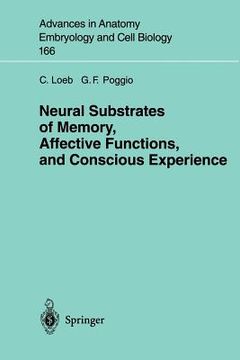
portada neural substrates of memory, affective functions, and conscious experience (en Inglés)
Formato
Libro Físico
Editorial
Año
2002
Idioma
Inglés
N° páginas
111
Encuadernación
Tapa Blanda
Dimensiones
23.4x15.6x0.6 cm
Peso
0.18 kg.
ISBN
3540436677
ISBN13
9783540436676

neural substrates of memory, affective functions, and conscious experience (en Inglés)

C. Loeb (Autor) · G. F. Poggio (Autor) · Springer · Tapa Blanda

neural substrates of memory, affective functions, and conscious experience (en Inglés) - Loeb, C. ; Poggio, G. F.

Libro Nuevo Importado
Envío: 16 a 23 días háb.
$ 218.30$ 120.06
-45%
Costos de importación incluídos en el precio ✅
Libro Nuevo

Quedan más de 100 unidades

$ 120.06
Llega entre el 22 Sep y el 05 Oct a Quito, Pichincha. Seleccionar ubicación

Reseña del libro "neural substrates of memory, affective functions, and conscious experience (en Inglés)"

It is important, indeed necessary, we believe, that the study of the higher brain func- tions be introduced by a brief account of the evolution of the philosophical thinking and scientific researches on cognition. The intuition that sensations and intelligence reside in the brain goes back to the Egyptians, in particular the Edwin Smith papyrus, probably dated between 2500 and 3000 b. c., where the term "brain" appears for the first time and where there is a description of its coverings (meninges) and circumvolutions (Walsh 1994). The philosophical debate on brain and mind made its appearance in ancient l Greece and in subsequent centuries developed among the philosophers. The flow of sensations, the process of thinking, and the site of reason were localized in the brain, according to Alcmaeon of Croton (sixth to fifth centuries b. c. ) and subsequently Lattanzio, Alexander of Tralles, Democritus, Anaxagoras, and particularly Hip- pocrates (460-377 b. c. ), who placed the soul, envisaged as a mental function, in the brain. Plato (427-347 b. c. ) believed that the brain provided the sensory experiences (hearing, sight, smell) and that from these were generated thinking and memory, and the act of thinking produced the truth or "episteme. " The formulation of the problem changes radically with Aristotle (384-322 b. c. ), who believed that the heart, and not the brain, was the site of passions, feelings, intelligence, and thought (Gross 1995).

Opiniones del libro

Preguntas frecuentes sobre el libro

Todos los libros de nuestro catálogo son Originales.
El libro está escrito en Inglés.
La encuadernación de esta edición es Tapa Blanda.

Preguntas y respuestas sobre el libro

¿Tienes una pregunta sobre el libro? Inicia sesión para poder agregar tu propia pregunta.

Opiniones sobre Buscalibre

Ver más opiniones de clientes