Envío express con hasta 50% OFF  Ver más

Enviar a
Quito, Pichincha
0
  • argentina
  • chile
  • colombia
  • españa
  • méxico
  • perú
  • estados unidos
  • internacional

Selecciona tu país

América

Europa

Resto del mundo

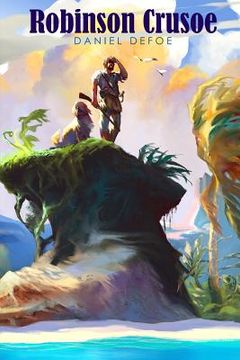
portada Robinson Crusoe
Formato
Libro Físico
Editorial
Idioma
Inglés
N° páginas
198
Encuadernación
Tapa Blanda
Dimensiones
22.9 x 15.2 x 1.1 cm
Peso
0.29 kg.
ISBN13
9781515141303

Robinson Crusoe

Daniel Defoe (Autor) · Createspace · Tapa Blanda

Robinson Crusoe - Daniel Defoe

Sin Stock

Reseña del libro "Robinson Crusoe"

Robinson Crusoe is a novel by Daniel Defoe, first published on 25 April 1719. The first edition credited the work's protagonist Robinson Crusoe as its author, leading many readers to believe he was a real person and the book a travelogue of true incidents. It was published under the full title The Life and Strange Surprizing Adventures of Robinson Crusoe, Of York, Mariner: Who lived Eight and Twenty Years, all alone in an un-inhabited Island on the Coast of America, near the Mouth of the Great River of Oroonoque; Having been cast on Shore by Shipwreck, wherein all the Men perished but himself. With An Account how he was at last as strangely deliver'd by Pyrates. Epistolary, confessional, and didactic in form, the book is presented as an autobiography of the title character (whose birth name is Robinson Kreutznaer)---a castaway who spends thirty years on a remote tropical island near Trinidad, encountering cannibals, captives, and mutineers before being rescued. Taken as non-fiction, the details of Robinson Crusoe are given at the start of the novel. The story has since been perceived to be based on the life of Alexander Selkirk, a Scottish castaway who lived for four years on the Pacific island called "Más a Tierra", now part of Chile, which was renamed Robinson Crusoe Island in 1966, but the time scale does not match. Other suggested sources for the narrative are the Latin or English translations of Ibn Tufail's Hayy ibn Yaqdhan, an earlier novel also set on a desert island. Another source for Defoe's novel could have been the Robert Knox account of his abduction by the King of Ceylon in 1659 in "An Historical Account of the Island Ceylon". In his 2003 book In Search of Robinson Crusoe, Tim Severin contends that the account of Henry Pitman in a short book chronicling his escape from a Caribbean penal colony and subsequent shipwrecking and desert island misadventures is the inspiration for the story. Arthur Wellesley Secord in his Studies in the narrative method of Defoe (1963: 21-111) painstakingly analyses the composition of Robinson Crusoe and gives a list of possible sources of the story, rejecting the common theory that the story of Selkirk is Defoe's only source. Despite its simple narrative style, Robinson Crusoe was well received in the literary world and is often credited as marking the beginning of realistic fiction as a literary genre. Before the end of 1719, the book had already run through four editions, and it has gone on to become one of the most widely published books in history, spawning numerous sequels and adaptations for stage, film, and television.
Daniel Defoe
  (Autor)
Ver Página del Autor
Escritor y periodista inglés, Daniel Defoe es conocido principalmente por su novela Robinson Crusoe (1719), aunque también destacó por su papel en el desarrollo de la prensa y por sus ensayos políticos y sociales.

Defoe abandonó sus estudios para convertirse en un discreto hombre de negocios, cuyas actividades no acabaron de resultar rentables, recibiendo incluso pena de prisión por sus deudas.

Es a partir de 1695, tras varios años de exilio por su ideología política, que comienza un nuevo negocio dedicado a tejas y a ladrillos que comienza a funcionar proporcionándole a su familia —estaba casado y tenía seis hijos— una mayor estabilidad económica.

Sin embargo, su activismo político le lleva a publicar varios ensayos o panfletos que le cuestan días de reclusión y de picota. Tras volver a la cárcel, Defoe pasa a trabajar desde una revista apoyando a facciones políticas del gobierno, participando en los servicios secretos ingleses.

En 1719 publica su gran novela, Robinson Crusoe, que le permite lanzarse a una carrera literaria jalonada de éxitos como Las aventuras del capitán Singleton, Diario del año de la peste o Moll Flanders. Su popularidad creció y su influencia en posteriores generaciones de escritores al potenciar el género novelístico es notable.

Pese a todo su éxito y sus relaciones con el gobierno, Defoe nunca logró una solvencia económica estable durante mucho tiempo. Su muerte en 1731 se dio mientras huía de nuevos acreedores.
Ver más
Ver menos

Opiniones del libro

Preguntas frecuentes sobre el libro

Todos los libros de nuestro catálogo son Originales.
El libro está escrito en Inglés.
La encuadernación de esta edición es Tapa Blanda.

Preguntas y respuestas sobre el libro

¿Tienes una pregunta sobre el libro? Inicia sesión para poder agregar tu propia pregunta.

Opiniones sobre Buscalibre

Ver más opiniones de clientes