B-Days hasta 60% OFF en Stock Limitado  Ver más

Enviar a
Quito, Pichincha
0
  • argentina
  • chile
  • colombia
  • españa
  • méxico
  • perú
  • estados unidos
  • internacional

Selecciona tu país

América

Europa

Resto del mundo

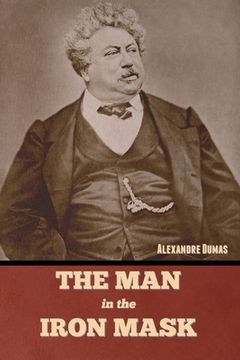
portada The Man in the Iron Mask (en Inglés)
Formato
Libro Físico
Idioma
Inglés
N° páginas
356
Encuadernación
Tapa Blanda
Dimensiones
22.9x15.2x2.3 cm
Peso
0.43 kg.
ISBN13
9781636379890

The Man in the Iron Mask (en Inglés)

Alejandro Dumas (Autor) · Bibliotech Press · Tapa Blanda

The Man in the Iron Mask (en Inglés) - Alejandro Dumas

Libro Nuevo Importado
Envío: 16 a 22 días háb.
$ 62.22$ 31.11
-50%
Costos de importación incluídos en el precio ✅
Libro Nuevo

Quedan 50 unidades

$ 31.11
Llega entre el 22 Sep y el 02 Oct a Quito, Pichincha. Seleccionar ubicación

Reseña del libro "The Man in the Iron Mask (en Inglés)"

The Man in the Iron Mask (French L'Homme au Masque de Fer; died 19 November 1703) was an unidentified prisoner of state, arrested in July 1669 under the pseudonym of "Eustache Dauger" and incarcerated for a period of 34 years during the reign of King Louis XIV of France (1643-1715). Known for remaining unidentified throughout his time in prison, he was held in the custody of the same jailer, Bénigne Dauvergne de Saint-Mars, in four successive French prisons, including the Bastille. When he died there on 19 November 1703, his inhumation certificate bore the pseudonym of "Marchialy".The true identity of this prisoner remains a mystery, even though it has been extensively debated by historians, and various theories have been expounded in numerous books, articles, plays, and films. Among the leading theories is one proposed by the French philosopher and writer Voltaire, who claimed in the second edition of his Questions sur l'Encyclopédie (1771) that the prisoner was an older, illegitimate brother of Louis XIV. This assertion of a royal connection was echoed later by authors who proposed variants of this aristocratic solution.What little is known about the prisoner is based on contemporary documents that surfaced during the 19th century, mainly some of the correspondence between Saint-Mars and his superiors, in which the prisoner had been labelled "only a valet" shortly after his arrest. Legend has it that no one is known to have seen his face, as it was hidden by a mask of black velvet cloth, later misreported by Voltaire as an iron mask. Official documents reveal, however, that the prisoner was made to cover his face only when travelling from one prison to the next, or in the final years of his incarceration; modern historians believe the latter measure was imposed by Saint-Mars solely to increase his own prestige at the end of his career, thus causing persistent rumours to circulate about this seemingly important prisoner.In 1932, French historian Maurice Duvivier proposed that the prisoner was Eustache Dauger de Cavoye, a nobleman associated with several political scandals of the late 17th century. This solution, however, was disproved in 1953 based on previously unpublished family letters located by another French historian, Georges Mongrédien, who concluded that the enigma remained unsolved owing to the lack of reliable historical documents about the prisoner's identity and the cause of his long incarceration.The Man in the Iron Mask has been the subject of many works of fiction, most prominently in the late 1840s by Alexandre Dumas. A section of his novel The Vicomte of Bragelonne: Ten Years Later, the final installment of his D'Artagnan saga, features the Man in the Iron Mask. In it, the prisoner is forced to wear an iron mask, and is portrayed as Louis XIV's identical twin. Dumas also presented a review of the popular theories about the prisoner extant in his time in the chapter "L'homme au masque de fer", published in the eighth volume of his non-fiction Crimes Célèbres. This panoramic approach was adopted by many subsequent authors, and speculative works have continued to appear on the subject. (wikipedia.org)
Alejandro Dumas
  (Autor)
Ver Página del Autor
Alexandre Dumas es uno de los autores más prolíficos y populares de Francia. Nació en 1802 en la ciudad de Villers-Cotterets, y pronto se trasladó a París para trabajar como secretario del Duque de Orléans. Allí, completó su formación de manera autodidacta y empezó a interesarse por la escritura.
Comenzó escribiendo obras teatrales, y después pasó a los poemas y los relatos largos. Sin embargo, su verdadero éxito no llegaría hasta 1844, año de lanzamiento de la obra que supondría su salto a la fama: Los tres mosqueteros. La publicación por folletines de esta novela trajo consigo una suma ingente de dinero para Dumas, pero también supuso incontables horas de trabajo, muchos colaboradores y la producción de hasta ochenta entregas para cubrir la demanda del público, que no paraba de crecer.
Tras la publicación de Los tres mosqueteros y El conde de Montecristo, Dumas amasó una gran fortuna. Sin embargo, su carácter hedonista lo llevó a despilfarrar todo lo que había ganado y pronto se vio obligado a exiliarse en Bélgica para huir de sus acreedores franceses.
El conde de Montecristo, la cumbre de la narrativa del autor, está considerada como una de las grandes novelas de aventuras de todos los tiempos.
Ver más
Ver menos

Opiniones del libro

Preguntas frecuentes sobre el libro

Todos los libros de nuestro catálogo son Originales.
El libro está escrito en Inglés.
La encuadernación de esta edición es Tapa Blanda.

Preguntas y respuestas sobre el libro

¿Tienes una pregunta sobre el libro? Inicia sesión para poder agregar tu propia pregunta.

Opiniones sobre Buscalibre

Ver más opiniones de clientes