¡45% dto en libros con envío express!  Ver más

Enviar a
Quito, Pichincha
0
  • argentina
  • chile
  • colombia
  • españa
  • méxico
  • perú
  • estados unidos
  • internacional

Selecciona tu país

América

Europa

Resto del mundo

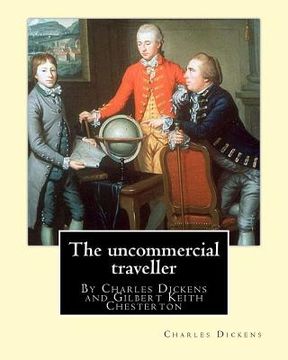
portada The uncommercial traveller, By Charles Dickens, introduction By G. K.Chesterton: By Charles Dickens and Gilbert Keith Chesterton (en Inglés)
Formato
Libro Físico
Editorial
Idioma
Inglés
N° páginas
216
Encuadernación
Tapa Blanda
Dimensiones
25.4 x 20.3 x 1.2 cm
Peso
0.44 kg.
ISBN13
9781535018517

The uncommercial traveller, By Charles Dickens, introduction By G. K.Chesterton: By Charles Dickens and Gilbert Keith Chesterton (en Inglés)

G. K. Chesterton (Autor) · Charles Dickens (Autor) · Createspace · Tapa Blanda

The uncommercial traveller, By Charles Dickens, introduction By G. K.Chesterton: By Charles Dickens and Gilbert Keith Chesterton (en Inglés) - Charles Dickens

Libro Nuevo Importado
Envío: 20 a 27 días háb.
$ 46.29$ 25.46
-45%
Costos de importación incluídos en el precio ✅
Libro Nuevo

Quedan 100 unidades

$ 25.46
Llega entre el 21 Ago y el 03 Sep a Quito, Pichincha. Seleccionar ubicación

Reseña del libro "The uncommercial traveller, By Charles Dickens, introduction By G. K.Chesterton: By Charles Dickens and Gilbert Keith Chesterton (en Inglés)"

The Uncommercial Traveller is a collection of literary sketches and reminiscences written by Charles Dickens.In 1859 Dickens founded a new journal called All the Year Round and the Uncommercial Traveller articles would be among his main contributions. He seems to have chosen the title and persona of the Uncommercial Traveller as a result of a speech he gave on 22 December 1859 to the Commercial Travellers' School London in his role as honorary chairman and treasurer. The persona sits well with a writer who liked to travel, not only as a tourist, but also to research and report what he found; visiting Europe, America and giving book readings throughout Britain. He does not seem content to rest late in his career when he had attained wealth and comfort and continued travelling locally, walking the streets of London in the mould of the flâneur, a 'gentleman stroller of city streets'. He often suffered from insomnia and his night-time wanderings gave him an insight into some of the hidden aspects of Victorian London, details of which he also incorporated into his novels.he role of the explorer and investigator of interesting things was explained by Dickens in the introduction to the work: Allow me to introduce myself-first negatively. No landlord is my friend and brother, no chambermaid loves me, no waiter worships me, no boots admires and envies me. No round of beef or tongue or ham is expressly cooked for me, no pigeon-pie is especially made for me, no hotel-advertisement is personally addressed to me, no hotel-room tapestried with great-coats and railway wrappers is set apart for me, no house of public entertainment in the United Kingdom greatly cares for my opinion of its brandy or sherry. When I go upon my journeys, I am not usually rated at a low figure in the bill; when I come home from my journeys, I never get any commission. I know nothing about prices, and should have no idea, if I were put to it, how to wheedle a man into ordering something he doesn't want. As a town traveller, I am never to be seen driving a vehicle externally like a young and volatile pianoforte van, and internally like an oven in which a number of flat boxes are baking in layers. As a country traveller, I am rarely to be found in a gig, and am never to be encountered by a pleasure train, waiting on the platform of a branch station, quite a Druid in the midst of a light Stonehenge of samples. And yet-proceeding now, to introduce myself positively-I am both a town traveller and a country traveller, and am always on the road. Figuratively speaking, I travel for the great house of Human Interest Brothers, and have rather a large connection in the fancy goods way. Literally speaking, I am always wandering here and there from my rooms in Covent-garden, London-now about the city streets: now, about the country by-roads-seeing many little things, and some great things, which, because they interest me, I think may interest others. These are my chief credentials as the Uncommercial Traveller. Dickens began by writing seventeen episodes, which were printed in All the Year Round between 28 January and 13 October 1860 and these were published in a single edition in 1861. He sporadically produced eleven more articles between 1863-65 and an expanded edition of the work was printed in 1866. Once more he returned to the persona with some more sketches written 1868-69 and a complete set of these articles was published posthumously in 1875. Gilbert Keith Chesterton, KC*SG (29 May 1874 - 14 June 1936), better known as G. K. Chesterton, was an English writer, [2] poet, philosopher, dramatist, journalist, orator, lay theologian, biographer, and literary and art critic.
G. K. Chesterton
  (Autor)
Ver Página del Autor
G. K. Chesterton (Londres, 29 de mayo de 1874 – Beaconsfield, 14 de junio de 1936) fue un prolífico escritor británico, autor de ensayos, novelas, poesía, biografías y apologética cristiana. Su obra se caracteriza por la ironía, el ingenio paradójico y una visión crítica de la modernidad. Fue un destacado converso al catolicismo y una figura influyente en el pensamiento religioso y literario de su tiempo. Se le conoce también por su estilo argumentativo brillante y por su defensa del sentido común.

Entre sus obras más reconocidas se encuentran El hombre que fue Jueves (1908), Ortodoxia (1908), El candor del padre Brown (1911), Herejes (1905), La esfera y la cruz (1909) y La resurrección de Roma (1930). Cultivó el ensayo, la novela de ideas, el relato policial y la crítica social y religiosa.
Ver más
Ver menos
Charles Dickens
  (Autor)
Ver Página del Autor
Charles Dickens (7 de febrero de 1812 - 9 de junio de 1870) nació en Portsmouth y era el primogénito varón de un funcionario de la Armada Real. A los doce años, el encarcelamiento de su padre por deudas lo obligó a ponerse a trabajar en una fábrica de betún. Su educación fue irregular: aprendió por su cuenta taquigrafía, trabajó como ayudante en el bufete de un abogado y finalmente fue corresponsal parlamentario del Morning Chronicle.

De familia humilde, el "bueno de Carlos" no recibió educación formal hasta los nueve años, siendo muy juzgado por la crítica de la época al considerar que Dickens era demasiado autodidacta. Su vida daría un giro inesperado con el encarcelamiento de su padre por las deudas, trasladándose su familia a vivir con él a la cárcel, permitido en ese momento por las leyes británicas. A la edad de 12 años ya es considerado apto para comenzar a trabajar en una fábrica de tintes. A pesar de que la situación de su familia había mejorado, su madre puso su empeño en que siguiera trabajando allí, inspirándole a escribir una de sus obras cumbre, David Copperfield.

Sus artículos, luego recogidos en Escenas de la vida de Londres por «Boz» (1836-1837), tuvieron gran éxito y, con la aparición en 1837 de Los papeles póstumos del Club Pickwick, Dickens se convirtió en un auténtico fenómeno editorial. Novelas como Oliver Twist (1837-1839), Nicholas Nickleby (1838-1839) o Barnaby Rudge (1841) alcanzaron enorme popularidad, así como algunas crónicas de viajes, como Estampas de Italia (1846). Con Dombey e hijo (1846-1848) inició su época de madurez, de la que son buenos ejemplos David Copperfield (1849-1850), su primera novela en primera persona y su favorita, en la que desarrolló algunos episodios autobiográficos; La Casa lúgubre (1852-1853); La pequeña Dorrit (1855-1857), Historia de dos ciudades (1859), Grandes esperanzas (1860-1861) y Nuestro amigo común (1864-1865). Murió en Gad's Hill, su casa de campo en Higham, en el condado de Kent.
Ver más
Ver menos

Opiniones del libro

Preguntas frecuentes sobre el libro

Todos los libros de nuestro catálogo son Originales.
El libro está escrito en Inglés.
La encuadernación de esta edición es Tapa Blanda.

Preguntas y respuestas sobre el libro

¿Tienes una pregunta sobre el libro? Inicia sesión para poder agregar tu propia pregunta.

Opiniones sobre Buscalibre

Ver más opiniones de clientes