Envío express con hasta 50% OFF  Ver más

Enviar a
Quito, Pichincha
0
  • argentina
  • chile
  • colombia
  • españa
  • méxico
  • perú
  • estados unidos
  • internacional

Selecciona tu país

América

Europa

Resto del mundo

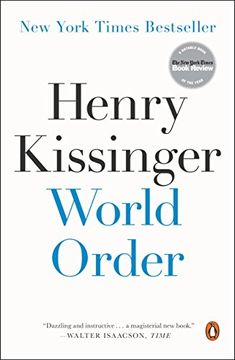
portada World Order (en Inglés)
Formato
Libro Físico
Editorial
Año
2015
Idioma
Inglés
N° páginas
432
Encuadernación
Tapa Blanda
Dimensiones
21.1 x 13.7 x 2.5 cm
Peso
0.36 kg.
ISBN13
9780143127710

World Order (en Inglés)

Henry Kissinger (Autor) · Penguin · Tapa Blanda

World Order (en Inglés) - Kissinger, Henry

Libro Nuevo Importado
Envío: 17 a 24 días háb.
$ 38.72$ 19.36
-50%
Costos de importación incluídos en el precio ✅
Libro Nuevo

Quedan 6 unidades

$ 19.36
Llega entre el 04 Sep y el 17 Sep a Quito, Pichincha. Seleccionar ubicación

Reseña del libro "World Order (en Inglés)"

"Dazzling and instructive . . . [a] magisterial new book." --Walter Isaacson, TimeAn astute analysis that illuminates many of today's critical international issues. --Kirkus Reviews Henry Kissinger offers in World Order a deep meditation on the roots of international harmony and global disorder. Drawing on his experience as one of the foremost statesmen of the modern era--advising presidents, traveling the world, observing and shaping the central foreign policy events of recent decades--Kissinger now reveals his analysis of the ultimate challenge for the twenty-first century: how to build a shared international order in a world of divergent historical perspectives, violent conflict, proliferating technology, and ideological extremism. There has never been a true "world order," Kissinger observes. For most of history, civilizations defined their own concepts of order. Each considered itself the center of the world and envisioned its distinct principles as universally relevant. China conceived of a global cultural hierarchy with the emperor at its pinnacle. In Europe, Rome imagined itself surrounded by barbarians; when Rome fragmented, European peoples refined a concept of an equilibrium of sovereign states and sought to export it across the world. Islam, in its early centuries, considered itself the world's sole legitimate political unit, destined to expand indefinitely until the world was brought into harmony by religious principles. The United States was born of a conviction about the universal applicability of democracy--a conviction that has guided its policies ever since. Now international affairs take place on a global basis, and these historical concepts of world order are meeting. Every region participates in questions of high policy in every other, often instantaneously. Yet there is no consensus among the major actors about the rules and limits guiding this process or its ultimate destination. The result is mounting tension. Grounded in Kissinger's deep study of history and his experience as national security advisor and secretary of state, World Order guides readers through crucial episodes in recent world history. Kissinger offers a unique glimpse into the inner deliberations of the Nixon administration's negotiations with Hanoi over the end of the Vietnam War, as well as Ronald Reagan's tense debates with Soviet Premier Gorbachev in Reykjavík. He offers compelling insights into the future of U.S.-China relations and the evolution of the European Union, and he examines lessons of the conflicts in Iraq and Afghanistan. Taking readers from his analysis of nuclear negotiations with Iran through the West's response to the Arab Spring and tensions with Russia over Ukraine, World Order anchors Kissinger's historical analysis in the decisive events of our time. Provocative and articulate, blending historical insight with geopolitical prognostication, World Order is a unique work that could come only from a lifelong policy maker and diplomat. Kissinger is also the author of On China.
Henry Kissinger
  (Autor)
Ver Página del Autor
Henry Kissinger (Fürth, Alemania, 27 de mayo de 1923 – Connecticut, Estados Unidos, 29 de noviembre de 2023) fue un diplomático, politólogo e historiador estadounidense de origen alemán, considerado una de las figuras más influyentes de la política internacional del siglo XX. Refugiado junto a su familia en Estados Unidos tras huir del régimen nazi en 1938, desarrolló una destacada carrera académica en la Universidad de Harvard, hasta convertirse en asesor y luego artífice de la política exterior estadounidense durante la Guerra Fría.
Como consejero de Seguridad Nacional y posteriormente Secretario de Estado bajo las administraciones de Richard Nixon y Gerald Ford, impulsó el acercamiento diplomático con China, la distensión con la Unión Soviética y los acuerdos de paz en Vietnam, por los que recibió el Premio Nobel de la Paz en 1973. Su capacidad estratégica y su estilo realista en las relaciones internacionales le otorgaron tanto admiradores como detractores, convirtiéndolo en una personalidad intensamente debatida en el ámbito político y académico.
Además de su labor gubernamental, publicó numerosos libros sobre diplomacia y geopolítica entre ellos Diplomacy y World Order, que se han convertido en textos de referencia para comprender la política internacional contemporánea. Su legado, marcado por logros diplomáticos y decisiones controvertidas, sigue generando análisis y discusión en torno a su visión del equilibrio de poder.
Tras abandonar la vida política activa, continuó como consultor y conferencista de gran prestigio, asesorando a gobiernos y empresas en todo el mundo. Hasta sus últimos años, mantuvo presencia en debates globales y fue considerado una de las voces más relevantes en el estudio de la estrategia y las relaciones internacionales.
Ver más
Ver menos

Opiniones del libro

Preguntas frecuentes sobre el libro

Todos los libros de nuestro catálogo son Originales.
El libro está escrito en Inglés.
La encuadernación de esta edición es Tapa Blanda.

Preguntas y respuestas sobre el libro

¿Tienes una pregunta sobre el libro? Inicia sesión para poder agregar tu propia pregunta.

Opiniones sobre Buscalibre

Ver más opiniones de clientes