Compartir
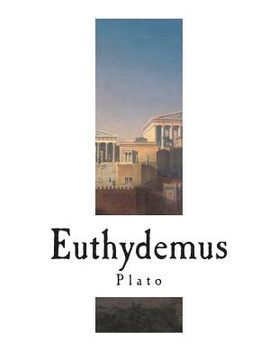
Euthydemus: The Dialogues of Plato (en Inglés)
Benjamin Jowett
(Traducido por)
·
Createspace
· Tapa Blanda
Euthydemus: The Dialogues of Plato (en Inglés) - Jowett, Benjamin ; Plato
Libro Nuevo
Importado
Envío: 21 a 28 días háb.
$ 40.72$ 20.36
Costos de importación incluídos en el precio ✅
Reseña del libro "Euthydemus: The Dialogues of Plato (en Inglés)"
The Dialogues of Plato: Euthydemus by Plato. Translated by Benjamin Jowett. Euthydemus, written c. 384 BC, is a dialogue by Plato which satirizes what Plato presents as the logical fallacies of the Sophists. In it, Socrates describes to his friend Crito a visit he and various youths paid to two brothers, Euthydemus and Dionysodorus, both of whom were prominent Sophists from Chios and Thurii. The Euthydemus contrasts Socratic argumentation and education with the methods of Sophism, to the detriment of the latter. Throughout the dialogue, Euthydemus and Dionysodorus continually attempt to ensnare Socrates with what are presented as deceptive and meaningless arguments, primarily to demonstrate their professed philosophical superiority. The Euthydemus, though apt to be regarded by us only as an elaborate jest, has also a very serious purpose. It may fairly claim to be the oldest treatise on logic; for that science originates in the misunderstandings which necessarily accompany the first efforts of speculation. Several of the fallacies which are satirized in it reappear in the Sophistici Elenchi of Aristotle and are retained at the end of our manuals of logic. But if the order of history were followed, they should be placed not at the end but at the beginning of them; for they belong to the age in which the human mind was first making the attempt to distinguish thought from sense, and to separate the universal from the particular or individual. How to put together words or ideas, how to escape ambiguities in the meaning of terms or in the structure of propositions, how to resist the fixed impression of an 'eternal being' or 'perpetual flux, ' how to distinguish between words and things-these were problems not easy of solution in the infancy of philosophy
- 0% (0)
- 0% (0)
- 0% (0)
- 0% (0)
- 0% (0)
Todos los libros de nuestro catálogo son Originales.
El libro está escrito en Inglés.
La encuadernación de esta edición es Tapa Blanda.
✓ Producto agregado correctamente al carro, Ir a Pagar.