Pre Feria Quito con hasta 60% OFF  Ver más

Enviar a
Quito, Pichincha
0
  • argentina
  • chile
  • colombia
  • españa
  • méxico
  • perú
  • estados unidos
  • internacional

Selecciona tu país

América

Europa

Resto del mundo

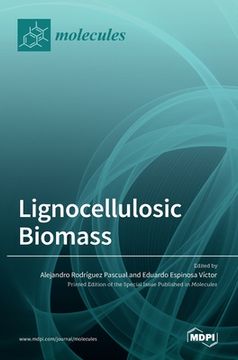
portada Lignocellulosic Biomass (en Inglés)
Formato
Libro Físico
Editorial
Idioma
Inglés
N° páginas
334
Encuadernación
Tapa Dura
Dimensiones
24.4x17x2.7 cm
Peso
0.92 kg.
ISBN13
9783036524757

Lignocellulosic Biomass (en Inglés)

Pascual, Alejandro Rodríguez ; Víctor, Eduardo Espinosa (Autor) · Mdpi AG · Tapa Dura

Lignocellulosic Biomass (en Inglés) - Pascual, Alejandro Rodríguez ; Víctor, Eduardo Espinosa

Libro Nuevo Importado
Envío: 20 a 27 días háb.
$ 154.25$ 84.84
-45%
Costos de importación incluídos en el precio ✅
Libro Nuevo

Quedan 100 unidades

$ 84.84
Llega entre el 27 Oct y el 11 Nov a Quito, Pichincha. Seleccionar ubicación

Reseña del libro "Lignocellulosic Biomass (en Inglés)"

Recently, there has been a growing awareness of the need to make better use of natural resources. Hence, the utilization of biomass has led to so-called biorefinery, consisting of the fractionation or separation of the different components of the lignocellulosic materials in order to achieve a total utilization of the same, and not only of the cellulosic fraction for paper production. The use of plant biomass as a basic raw material implies a shift from an economy based on the exploitation of non-renewable fossil fuels, with limited reserves or with regeneration cycles far below the rates of exploitation, to a bioeconomy based on the use of renewable organic natural resources, with balanced regeneration and extraction cycles. To make this change, profound readjustments in existing technologies are necessary, as well as the application of new approaches in research, development, and production. "Biorefinery" is the term used to describe the technology for the fractionation of plant biomass into energy, chemicals, and consumer goods. The future generation of biorefinery will include treatments, leading to high-value-added compounds. The use of green chemistry technologies and principles in biorefineries, such as solvent and reagent recovery and the minimization of effluent and gas emissions, is essential to define an economically and environmentally sustainable process. In particular, the biorefinery of lignocellulosic materials to produce biofuels, chemicals and materials is presented as a solid alternative to the current petrochemical platform and a possible solution to the accumulation of greenhouse gases.

Opiniones del libro

Preguntas frecuentes sobre el libro

Todos los libros de nuestro catálogo son Originales.
El libro está escrito en Inglés.
La encuadernación de esta edición es Tapa Dura.

Preguntas y respuestas sobre el libro

¿Tienes una pregunta sobre el libro? Inicia sesión para poder agregar tu propia pregunta.

Opiniones sobre Buscalibre

Ver más opiniones de clientes