Envío express desde $5  Ver más

Enviar a
Quito, Pichincha
0
  • argentina
  • chile
  • colombia
  • españa
  • méxico
  • perú
  • estados unidos
  • internacional

Selecciona tu país

América

Europa

Resto del mundo

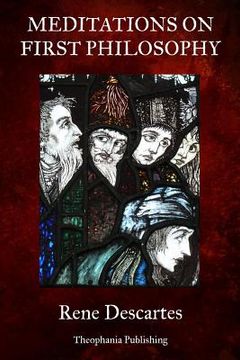
portada Meditations on First Philosophy (en Inglés)
Formato
Libro Físico
Editorial
Idioma
Inglés
N° páginas
116
Encuadernación
Tapa Blanda
Dimensiones
22.9x15.2x0.6 cm
Peso
0.16 kg.
ISBN13
9781469934297

Meditations on First Philosophy (en Inglés)

René Descartes (Autor) · Createspace · Tapa Blanda

Meditations on First Philosophy (en Inglés) - René Descartes

Libro Nuevo Importado
Envío: 21 a 28 días háb.
$ 57.65$ 31.71
-45%
Costos de importación incluídos en el precio ✅
Libro Nuevo

Quedan 100 unidades

$ 31.71
Llega entre el 07 Oct y el 21 Oct a Quito, Pichincha. Seleccionar ubicación

Reseña del libro "Meditations on First Philosophy (en Inglés)"

Thank you for checking out this book by Theophania Publishing. We appreciate your business and look forward to serving you soon. We have thousands of titles available, and we invite you to search for us by name, contact us via our website, or download our most recent catalogues. The motive which impels me to present this Treatise to you is so reasonable, and when you shall learn its design, I am confident that you also will consider that there is ground so valid for your taking it under your protection, that I can in no way better recommend it to you than by briefly stating the end which I proposed to myself in it. I have always been of the opinion that the two questions respecting God and the Soul were the chief of those that ought to be determined by help of Philosophy rather than of Theology; for although to us, the faithful, it be sufficient to hold as matters of faith, that the human soul does not perish with the body, and that God exists, it yet assuredly seems impossible ever to persuade infidels of the reality of any religion, or almost even any moral virtue, unless, first of all, those two things be proved to them by natural reason. And since in this life there are frequently greater rewards held out to vice than to virtue, few would prefer the right to the useful, if they were restrained neither by the fear of God nor the expectation of another life; and although it is quite true that the existence of God is to be believed since it is taught in the sacred Scriptures, and that, on the other hand, the sacred Scriptures are to be believed because they come from God (for since faith is a gift of God, the same Being who bestows grace to enable us to believe other things, can likewise impart of it to enable us to believe his own existence), nevertheless, this cannot be submitted to infidels, who would consider that the reasoning proceeded in a circle. And, indeed, I have observed that you, with all the other theologians, not only affirmed the sufficiency of natural reason for the proof of the existence of God, but also, that it may be inferred from sacred Scripture, that the knowledge of God is much clearer than of many created things, and that it is really so easy of acquisition as to leave those who do not possess it blameworthy. This is manifest from these words of the Book of Wisdom, chap. xiii., where it is said, Howbeit they are not to be excused; for if their understanding was so great that they could discern the world and the creatures, why did they not rather find out the Lord thereof?
René Descartes
  (Autor)
Ver Página del Autor
René Descartes (1596–1650) fue un filósofo, matemático y científico francés, considerado uno de los padres de la filosofía moderna. Nació en La Haye en Touraine, en una familia acomodada, y recibió una formación sólida en el Colegio de La Flèche, uno de los centros jesuitas más prestigiosos de la época. Su curiosidad por el conocimiento lo llevó a interesarse tanto por las ciencias como por la lógica, alejándose progresivamente de la escolástica tradicional.

En el ámbito filosófico, Descartes es célebre por su método basado en la duda sistemática, cuyo propósito era encontrar un fundamento absolutamente seguro para el conocimiento. De este proceso surgió su famosa afirmación “Cogito, ergo sum” (“Pienso, luego existo”), que se convirtió en la base de su sistema racionalista. Sus obras principales, como Meditaciones metafísicas y Discurso del método, marcaron un antes y un después en la filosofía occidental.

Como matemático, hizo contribuciones fundamentales: estableció la geometría analítica, que unió el álgebra con la geometría al introducir el uso de coordenadas para describir figuras. También aportó al desarrollo del método científico y estudió fenómenos físicos como la óptica y el movimiento.

Descartes pasó buena parte de su vida adulta en los Países Bajos, donde escribió la mayor parte de su obra. Murió en Estocolmo en 1650, invitado por la reina Cristina de Suecia. Su legado continúa influyendo la filosofía, la ciencia y las matemáticas hasta la actualidad.
Ver más
Ver menos

Opiniones del libro

Preguntas frecuentes sobre el libro

Todos los libros de nuestro catálogo son Originales.
El libro está escrito en Inglés.
La encuadernación de esta edición es Tapa Blanda.

Preguntas y respuestas sobre el libro

¿Tienes una pregunta sobre el libro? Inicia sesión para poder agregar tu propia pregunta.

Opiniones sobre Buscalibre

Ver más opiniones de clientes